Bingo 101 Rummy: Rules and Game Variants
Bingo 101 rummy uses the standard thirteen card format: draw one, discard one, and arrange the hand into sequences and sets with at least one pure sequence. This guide covers formats, valid declarations and the table rules to read before you play.
On this page
Available Rummy Formats
Bingo 101 rummy sits on the card and table shelf of the app, a group of 12 titles that also holds Teen Patti, Andar Bahar and Dragon vs Tiger. It is the slow, thoughtful end of the lobby. A slot settles in seconds and asks nothing of you after the stake. A rummy hand takes minutes and asks for a decision on every turn.
The game follows the standard thirteen card format used across India. Each player is dealt thirteen cards, and on every turn you draw one card and discard one, so you always end your turn holding thirteen. The aim is to arrange the whole hand into valid groups before anyone else does.
Formats You May See
Rummy is played in more than one format, and the lobby may offer more than one table type. The formats Indian players usually know are points rummy, where a single deal decides the result, and pool rummy, where players are knocked out over several deals. Which of these the app shows at any time depends on the current lobby, so check the table name and its rules before the first card is dealt.
In every format you play against other people at the table, not against the house. The deal is luck, but your choices after the deal are your own. For how rummy compares with the other shelves in the app, see Bingo 101 games: how each category works.
Sequences and Sets
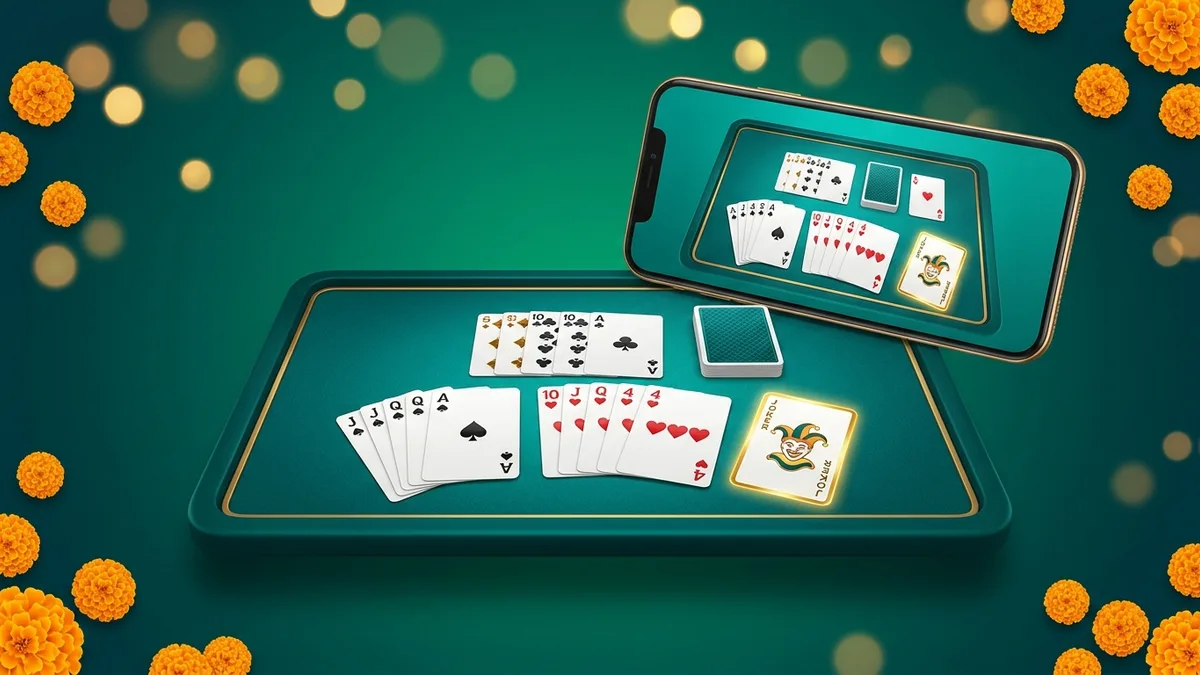
At the start of a hand one card is turned face up to begin the discard pile, and the rest form the closed draw pile. On your turn you take the top card from either pile, then throw one card away.
- Taking from the discard pile shows opponents exactly what you picked up, so it costs you some secrecy.
- Taking from the closed pile is a blind draw, so it costs you certainty.
Neither choice is right every time. You use them to build two kinds of group.
Sequences
Three or more consecutive cards of the same suit, such as the five, six and seven of hearts. A pure sequence is built only from natural cards, with no joker in it. An impure sequence uses a joker to fill a missing card.
Sets
Three or four cards of the same rank from different suits, such as three sevens in three different suits. A joker can stand in for a missing card in a set.
One Card, One Group
A card can sit in only one group. If it fits two, you choose, and that choice is often the whole point of the hand. A useful way to plan is in two layers: first look for a pure sequence, then a second sequence that can borrow a joker if it must, and treat sets as flexible filler. If you cannot see a pure sequence after your first few draws, no number of sets will fix the hand.
Early discards matter more than most players expect. A card thrown away in round two is a card you cannot use in round nine. High cards that connect to nothing and duplicates you cannot build with are the usual early discards. Watch what opponents pick up, because it tells you what they are collecting and which cards are unsafe to throw.
Valid Declaration
When your hand is ready, you discard your last card face down and show your arrangement. This is the declaration. For it to be valid:
- All thirteen cards must be arranged into sequences and sets.
- There must be at least two sequences.
- At least one of those sequences must be pure, with no joker in it.
The pure sequence rule exists for a reason. Without it, a hand could be finished entirely on jokers, and luck with substitutes would beat every other kind of skill. Forcing one clean sequence keeps the hand honest. Remember that a joker placed inside a sequence makes it impure, so it cannot be counted as your pure one.
Wrong Declarations
If the arrangement is invalid, the penalty falls on you, however close you were. A hand with one sequence and a stray joker, or a second sequence that is not actually in order, is a wrong declaration and is charged as one.
The practical advice is simple and it works. Before you press declare, read your hand once more, group by group, and confirm that one sequence is pure. A short check costs less than a penalty.
Scoring and Table Rules
Points, penalties and fees are set by the table you join, so the rules screen is the place to read them. It is usually an icon near the top or a corner of the table. Before you sit down, check these things:
- The format: know whether you are at a single deal table or one that runs over several deals.
- How cards are scored: the rules state how unmatched cards count against you and what a wrong declaration costs.
- How jokers work: the rules confirm how the table treats jokers.
- The entry amount: start with the smallest entry on offer, because mistakes are cheaper there.
- The fee: if the table shows a fee or a prize pool, compare them. The difference is what the app keeps.
How the Fee Affects You
In a cash room the app takes a cut of the pot, and the table rules state the exact fee. That cut is the house edge in rummy. It comes out of every pot whoever wins, so a player who wins slightly more than half of their rounds can still end up behind once the fee is counted. Skill improves your results against other players, but it does not remove the cost of playing.
Myths to Ignore
- A predictor app cannot see the closed pile. Tools that claim to do so want a fee or your login details.
- The deck is shuffled for every deal, so past hands say nothing about the next one.
- A bigger stake changes how much you win or lose, not which cards you get.
Finding Rummy in the App and Setting Limits
Rummy is part of the single Bingo 101 app, so there is no separate rummy download. Any page offering a standalone rummy file for this platform is offering something that is not published with the app. Install the app once from the Bingo 101 APK download for Android page (version 1.2.0, 35.7 MB, Android 5.0 or later), then sign in with your mobile number and OTP. If you cannot get in, the Bingo 101 login and account access guide covers the usual fixes. Rummy is on the card and table shelf of the lobby, and the search box finds it by name.
Because rummy is slow, it can feel safer than a fast game. It is not automatically safe. Decide a spending limit, a time limit and a stop rule before the first deal, and do not top up after a wrong declaration. Bonus money carries wagering conditions, so read the terms before playing with it. Bingo 101 is for players aged 18 and over; the responsible gaming page has practical steps if play stops being fun.
Frequently Asked Questions
What are sets and sequences in rummy?
A sequence is three or more consecutive cards of the same suit. A set is three or four cards of the same rank from different suits. A sequence with no joker is called a pure sequence.
What makes a rummy declaration valid?
All thirteen cards must be in sequences and sets, with at least two sequences and at least one of them pure. Check the table's joker and scoring rules before you declare.
What happens if I make a wrong declaration?
The penalty falls on you, even if your hand was close. Read every group once more before you press declare.
Does a good rummy strategy guarantee a win?
No. Decisions matter over many rounds, but the deal, the draws and your opponents also affect each result, and the app's fee comes out of every cash pot.
Do I need a separate download for Bingo 101 rummy?
No. Rummy is on the card and table shelf of the single Bingo 101 Android app.
Related Guides
- Bingo 101 Games: How Each Category WorksHow Each Game Category Works
- Bingo 101 All Games: Browse the CatalogueAll 216 Games by Category
- Bingo 101 Andar Bahar: Rules and Round GuideAndar Bahar Rules and Rounds
- Bingo 101 Dragon vs Tiger: Rules and OutcomesDragon vs Tiger Rules
- Responsible GamingResponsible gaming