Bingo 101 Jhandi Munda: Symbols and Rules
Bingo 101 Jhandi Munda is the traditional Indian six dice game, also known as Langur Burja, played in the app with six symbols instead of numbers. This guide explains the symbols, how a round runs, how matches are counted and where to read the paytable.
On this page
Dice and Symbols
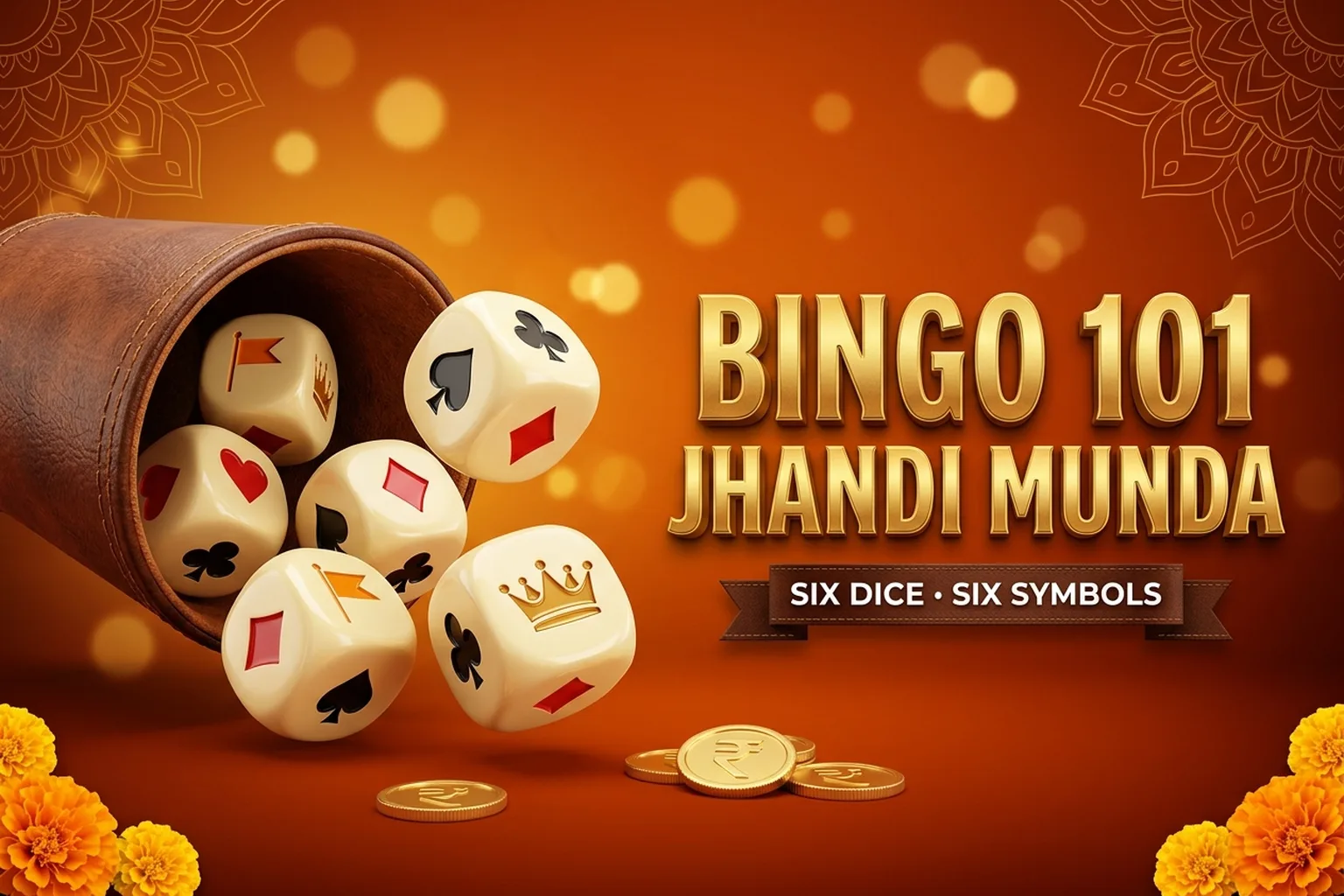
Bingo 101 Jhandi Munda brings one of the oldest dice games in India into the Bingo 101 app. Many players first saw it on a cloth mat at a village fair or during a festival, often under its other name, Langur Burja. Six dice are rolled at once, each die carries six symbols instead of numbers, and you bet on the symbol you think will show.
Every die is a normal six sided cube with pictures on the faces. The same six symbols appear on all six dice:
- Flag. The jhandi that gives the game the first half of its name.
- Face. The munda, which gives it the second half. Some versions show a crown here instead.
- Heart, spade, club and diamond. The four familiar card suits.
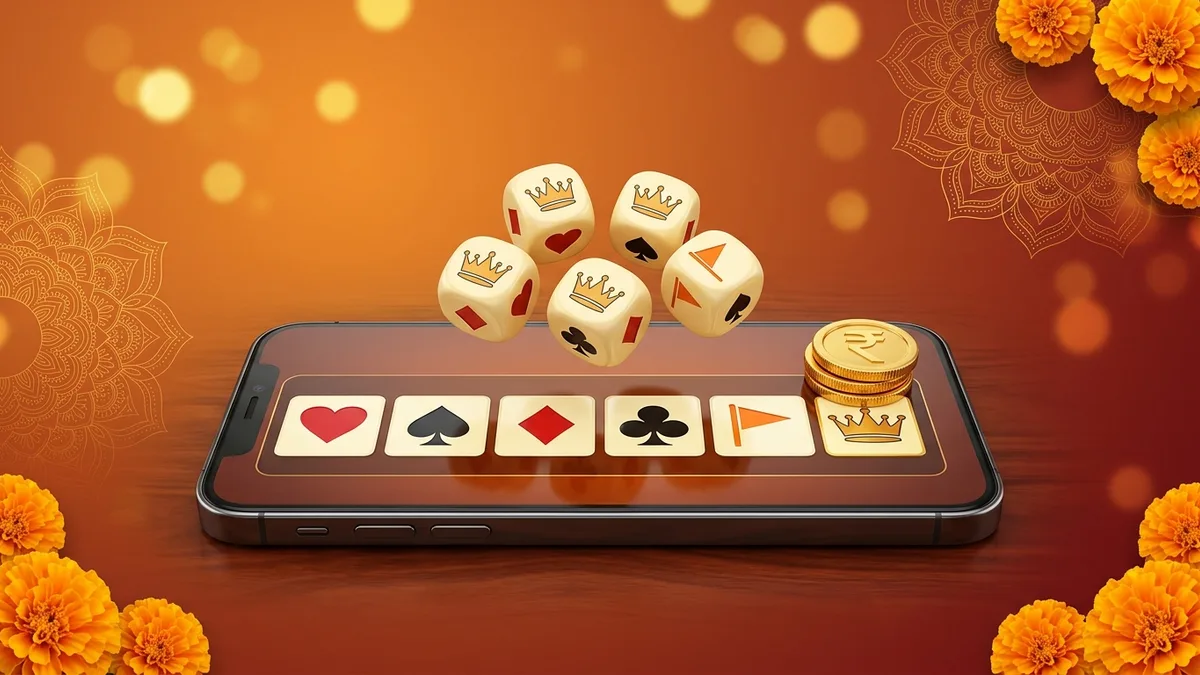
On the table each symbol has its own betting square, and the result of a roll is shown as six symbols side by side. All six symbols have exactly the same chance on every die, so there is no lucky symbol, only favourite ones.
In the app, Jhandi Munda sits in the card and table category with Teen Patti, Rummy, Andar Bahar, Dragon vs Tiger and Seven Up Down. For a section by section tour of the lobby, read Bingo 101 Games: How Each Category Works.
Round Sequence
Every round of Bingo 101 Jhandi Munda follows the same order. Once you have watched one, you know the game.
- The betting window opens. Most tables show a timer while bets are accepted.
- You choose a symbol and place a stake on its square with the chip selector. Most tables let you back more than one symbol in the same round, each as a separate bet.
- The window closes and all six dice are rolled together.
- The table counts how many of the six dice show each symbol.
- If your symbol appears on at least the number of dice the table pays for, you win, and the payout rises with every extra match. If not, the stake is lost. Then the next round opens.
Rounds are over in seconds and there is no second decision once the dice are thrown. The result is settled on the server, and the animation shows an outcome that has already been fixed. You cannot influence it, and neither can any other player.
You need to be signed in to reach the table. If the mobile number or OTP step gives you trouble, see Bingo 101 login and account access. Never share an OTP or password with anyone, including people who claim to be support.
Matching Results
This is where Jhandi Munda differs from most dice games. You are not betting on a total or a side. You are betting on a count: how many of six dice will agree with your choice.
Each die has a one in six chance of showing your symbol, and there are six dice. The table below shows roughly how often a single chosen symbol lands on each number of dice. It is general dice math and holds on any fair set of six dice.
| Dice showing your symbol | How often, roughly |
|---|---|
| None | About 33 rounds in 100 |
| One | About 40 rounds in 100 |
| Two | About 20 rounds in 100 |
| Three | About 5 rounds in 100 |
| Four | Less than 1 round in 100 |
| Five or six | Very rare, a handful in 10,000 or fewer |
A single match is the most common outcome, and about one round in three your symbol does not show at all. Three or more matches are rare enough that most sessions will see only a few.
Backing More Than One Symbol
Spreading chips across several squares makes a round feel safer, because one of your symbols often shows. Each symbol is still a separate bet with its own edge, though, and the stakes on the symbols that miss usually cost more than the one that hits returns. Covering all six symbols does not remove the loss either: some symbol always shows, but you pay for the five that do not.
Current Paytable
On most Jhandi Munda tables, one match returns a small amount, often around the stake, and each extra match multiplies it. Some versions start paying only from two matches. These are common shapes of the game, not a promise about any table. The exact payout for each number of matches is shown on the table screen or behind the rules button, and that number is the only one that counts.
The house edge lives in the gap between how often each count happens and what the table pays for it. Every payout is set slightly below what its true chance would justify, so across many rounds the table keeps a share of every stake. The big payouts for four or five matches look generous, but they come up so rarely that they do not change the overall direction. No figure is given here, because the number that applies is the one in the rules of your table.
What to Read on the Screen First
- The six symbol squares. Know which picture is which before the timer starts.
- The payout for one, two, three and more matches. The most important numbers on the screen.
- The chip selector and timer. Pick your stake early, not in the last seconds of the window.
- The history strip. A record of recent rolls, not a forecast of the next one.
- The rules button. The place to confirm payouts and side rules.
Finding Jhandi Munda in the App
There is no standalone Jhandi Munda app. The game is a section of the single Bingo 101 app: open the lobby, switch to the card and table category and look for Jhandi Munda by name, or use the search box.
The app is Android only, version 1.2.0, 35.7 MB, and runs on Android 5.0 or later. Get the current file from the Bingo 101 APK download for Android page. Every game draws on the same wallet, the minimum add cash is ₹30, and the first add cash carries a 10% bonus up to ₹10,000 with wagering conditions covered in the Bingo 101 bonus guide.
Myths and Limits
Jhandi Munda carries a lot of folk wisdom from the fair ground, and very little of it holds up.
- Predictor apps. Results settle on the server, and nothing on a phone can see or change them. Apps that claim otherwise are after a fee or your login details.
- A quiet symbol is due. Dice have no memory. A symbol that has not shown for a while is no more likely on the next roll.
- Doubling after each loss. It only raises the amount at risk, and it ends when your balance runs out or the table limit stops you.
Rounds are quick, and backing several symbols multiplies the number of stakes. Count every symbol as a separate stake, decide your amount and stop time before the first roll, and do not top up mid session. A game that feels familiar from childhood can make chasing losses feel harmless, and that is exactly when it is not. Bingo 101 is for players aged 18 and over, and the responsible gaming page lists the account controls.
For a similar fast dice table, see the Bingo 101 7 Up Down guide. If you want a game where your choices matter more, the Bingo 101 Rummy guide covers the card game that rewards skill most in the lobby.
Frequently Asked Questions
What are the six symbols in Bingo 101 Jhandi Munda?
Flag, face, heart, spade, club and diamond. Jhandi means flag and munda refers to the face, which is where the name comes from.
How are symbols used in Jhandi Munda?
You place a stake on one or more symbol squares before six dice are rolled. Your bet is settled by how many of the six dice show the symbol you backed.
Where should I check Jhandi Munda payouts?
On the table screen or behind the rules button of the game you are playing. Payouts depend on the number of matching dice and can differ between tables.
Can earlier symbol results predict the next roll?
No. Each roll is independent and settles on the server, so past results and predictor apps cannot tell you what comes next.
Do I need a separate app for Jhandi Munda?
No. It is a section of the single Bingo 101 Android app, version 1.2.0, and uses the same wallet as every other game.
Related Guides
- Bingo 101 Games: How Each Category WorksHow Each Game Category Works
- Bingo 101 7 Up Down: Rules and Outcomes7 Up Down: dice totals and bets
- Bingo 101 All Games: Browse the CatalogueAll 216 Games by Category
- Bingo 101 Andar Bahar: Rules and Round GuideAndar Bahar Rules and Rounds
- Responsible GamingResponsible gaming